It's the Tuesday before closing. The buyer's loan is clear to close, the appraisal came in fine, and the only thing left on the checklist is the homeowner's insurance binder the lender needs before they'll release funds. Then the buyer's agent gets a call from the insurance company: no binder, not without an electrical compliance report, and maybe not at any price until the branch wiring gets fixed.
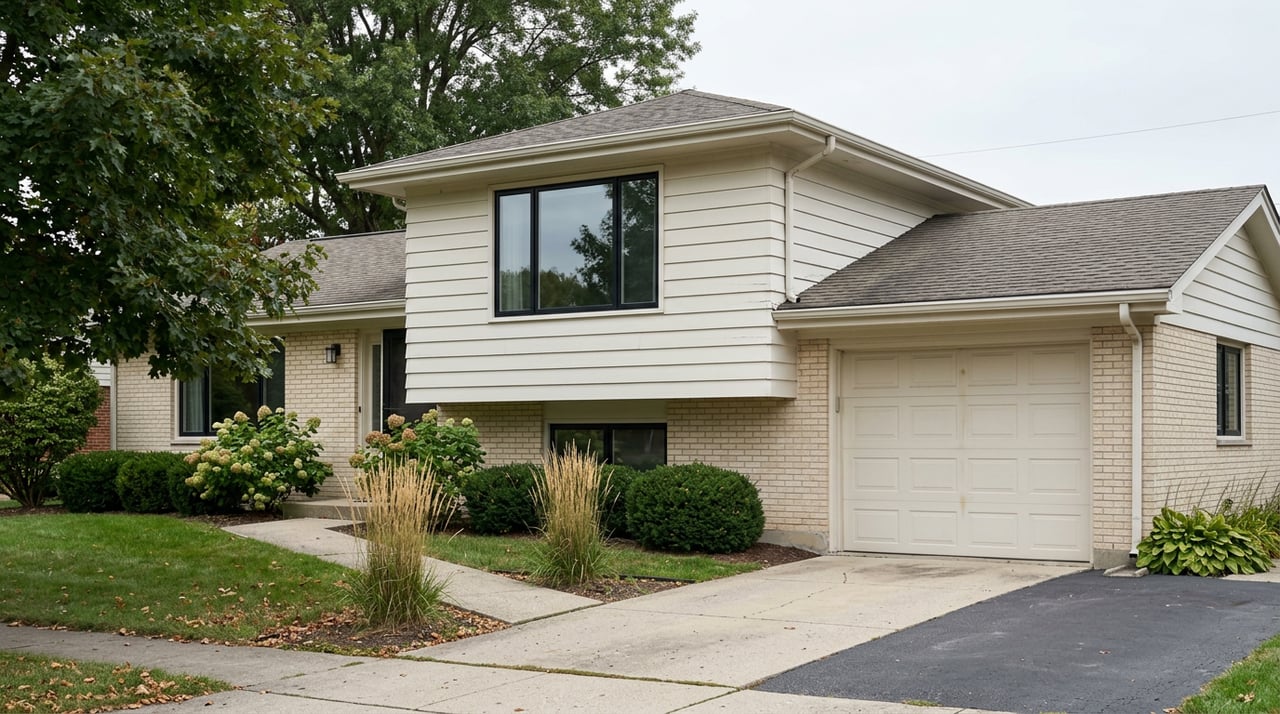
If you own or are about to buy a split-level, rancher, or Cape Cod in Parkville built in the 1960s, this is the scenario worth understanding before you list or write an offer, not after. The reason isn't a bad home inspector or an unlucky buyer. It's that the insurance underwriter, not the inspector, has quietly become the person who decides whether a Parkville sale closes on schedule.
Why this is a Parkville-specific problem
Parkville's housing stock skews older than most of the surrounding Baltimore County suburbs. The area was built out heavily during the postwar boom, and its defining housing types are the split-level and the Cape Cod, the kinds of one-and-a-half-story homes that filled in the blocks around Old Harford Road, Putty Hill Avenue, and Joppa Road as the county grew north from the city line along the Beltway corridor.
That construction era matters for one specific reason: between roughly 1965 and 1973, a spike in copper prices pushed builders across the country toward aluminum for branch-circuit wiring, the wiring that runs from the panel to outlets, switches, and light fixtures throughout a house. It was code-compliant at the time. It is also the single most common reason an older Parkville home hits a snag during underwriting today.
Parkville's age profile puts a large share of its homes squarely inside that window. The neighborhood's housing mix leans heavily pre-1970, with a much smaller slice built in the 1970-1999 range and only a sliver from 2000 forward. That means a meaningful number of the split-levels and capes currently on the market, or currently owned by someone thinking about selling, were built or wired in exactly the years when aluminum branch wiring was standard practice.
What the inspector might not tell you
A general home inspection is built to catch what's visible and functional on the day of the walkthrough. Aluminum wiring is often neither. It runs behind drywall, and a properly functioning outlet doesn't announce what metal is behind the cover plate. Some inspectors will note "aluminum wiring suspected" if they spot the telltale "AL" or "Aluminum" stamp on an exposed cable in the attic or basement panel. Many will simply flag it as a condition to have evaluated further by a licensed electrician, which sounds like a formality until it turns into a financing condition three weeks later.
The U.S. Consumer Product Safety Commission's research is the reason insurers treat this differently than a cosmetic inspection item. Homes wired with aluminum manufactured before 1972 are 55 times more likely to develop a connection that reaches fire hazard conditions than a comparable home wired with copper. That statistic isn't about the wire itself failing. It's about what happens at the connection points, at every outlet, switch, and fixture, where aluminum's tendency to expand and contract more than copper gradually loosens the joint and lets resistance and heat build over time.
Insurers know this, and it shapes how they underwrite. Some carriers will write a policy on an aluminum-wired home only after a licensed electrician certifies the connections have been corrected. Others decline the risk outright. A buyer who assumed their homeowner's insurance would be a rubber stamp can find out otherwise days before closing, at the exact moment they have the least leverage to renegotiate anything.
The fix, and what it actually costs
The good news for Parkville sellers is that this is a solvable, well-documented problem, not a structural one. Electricians typically address aluminum branch wiring one of two ways.
- Pigtailing with COPALUM or AlumiConn connectors. A licensed electrician splices a short length of copper wire onto the aluminum at every connection point, using a specialized crimp (COPALUM) or a lug-style connector (AlumiConn). This corrects the failure point without tearing open walls, and it's the remedy several major insurers will accept in place of a full rewire.
- A full rewire. Replacing the branch circuits outright with copper is the more invasive and more expensive option, but it removes the issue permanently rather than treating each connection individually.
Cost is where sellers usually underestimate the stakes. A full panel upgrade in the Baltimore area, moving from a 100-amp to a 200-amp service, typically runs in the range of $2,500 to $4,250 as of 2026, including the panel, meter socket, permit, and utility coordination. Pigtailing a house's worth of outlets and switches is generally a fraction of that, but it still requires a licensed electrician's time at every connection point in the home, not a quick afternoon fix.
Either way, this is not a project to discover you need in the middle of a ratified contract.
The permit piece that trips people up
Baltimore County requires an electrical permit for branch wiring work, and the work has to be pulled by a properly licensed and registered electrician, not a handyman doing a favor. The county's Department of Permits, Approvals and Inspections oversees this, and as of January 1, 2026, registered electricians in Baltimore County are also required to complete continuing education hours as part of keeping that registration current, with coursework tied to current National Electrical Code changes.
That detail matters more than it sounds like it should. Unpermitted electrical work doesn't just risk a bad repair. It becomes a disclosure problem for the next sale, and it can complicate a homeowner's insurance claim if there's ever a loss traced back to work nobody inspected. A remediation done without a permit solves today's underwriting problem and quietly creates tomorrow's.
The homes that sail through underwriting aren't the ones without aluminum wiring. They're the ones where the seller already knows what's behind the walls and has the paperwork to prove it was fixed correctly.
A pre-listing sequence that protects your timeline
If you own a Parkville home built between the mid-1960s and early 1970s and you're thinking about selling, the order of operations is what protects you.
- Check your own panel and a few accessible outlets for the "AL" or "Aluminum" stamp on the cable jacket before you list.
- If you find it, or suspect it, hire a licensed Baltimore County electrician to do a full evaluation rather than a spot check.
- Get remediation quotes for both pigtailing and a full rewire so you know your actual number, not an estimate from memory.
- Decide whether to remediate before listing or price the home to reflect the cost, and disclose the finding either way.
- Keep the permit and the electrician's compliance documentation together so it can move to the buyer's insurance agent the moment it's requested, not three weeks into their search for it.
What this means if you're the one buying
If you're the buyer of a Parkville split-level, ask about the wiring before you're deep into a contract, not after. Ask your lender's insurance requirements up front, and ask your own agent to request any electrical documentation the seller has as part of your due diligence. A seller who already has a compliance report on hand is telling you something useful about how the rest of the transaction is likely to go.
Frequently asked questions
Does every Parkville home from the 1960s have aluminum wiring? No. Copper remained available throughout the era, and some builders and additions used it. Aluminum branch wiring was common enough in homes built or wired between 1965 and 1973 that it's worth checking, not something to assume is automatically present.
Will my homeowner's insurance company just refuse to cover the home? It depends on the carrier. Some will insure an aluminum-wired home once a licensed electrician certifies the connections have been corrected. Others decline the risk regardless of remediation. This is exactly why getting ahead of it during listing prep, rather than during underwriting, keeps your options open.
Is pigtailing enough, or do I need a full rewire? Many insurers accept pigtailing with COPALUM or AlumiConn connectors as a permanent fix, since the failure point is at the connections rather than the wire itself. A full rewire is more expensive but removes the aluminum from the branch circuits entirely. Which one makes sense depends on your budget, your timeline, and what your buyer's specific carrier will accept.
Does Baltimore County require a permit even for pigtailing repairs? Electrical work of this kind generally requires a permit and a licensed, county-registered electrician. Skipping that step to save time can create a bigger problem at your next sale than the one you were trying to solve.
If you're weighing whether to remediate before listing your Parkville split-level, or you want a straight answer on what a buyer's insurance carrier is likely to require, Dan Cohen Homes can walk through your specific situation and connect you with electricians who know exactly what Baltimore County and local insurers expect. Get a Free Consultation before this becomes a closing-week surprise instead of a listing-prep decision.
