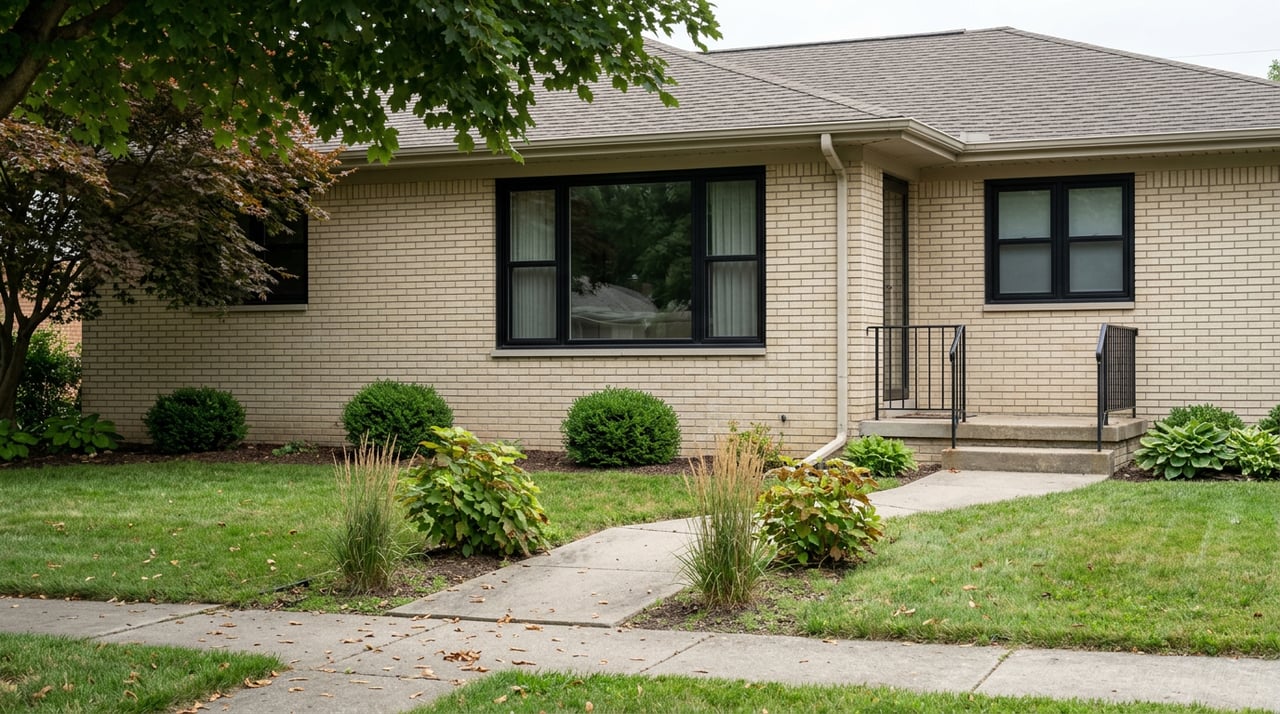
Walk the side yard of most brick ranchers off Slade Avenue or the colonials tucked into the streets north of Reisterstown Road, and you'll sometimes spot it: a capped pipe rising a few inches out of the lawn, painted over or half-buried in mulch, easy to mistake for an old sprinkler head. It's usually the fill pipe for a heating oil tank that hasn't taken a delivery in decades. Most sellers walk past it for years without a second thought. Then a contract goes under review, an inspector asks a question, and the pipe stops being landscaping and starts being a line item.
Here's what most sellers assume going into that conversation, and why both assumptions are now outdated. The first is that this is a routine punch-list item, something a contractor handles in a day or two like a radon mitigation fan. The second is that if the tank turns out to be leaking, Maryland has a state fund that covers the cleanup. Neither is reliably true anymore, and the second one changed for good more than two years ago.
Why This Is a Pikesville Problem, Not a Generic One
This isn't a footnote that applies equally to every Baltimore-area listing. Pikesville's housing stock is unusually concentrated in the exact era when buried oil tanks were standard construction. A longtime Baltimore Sun neighborhood profile put it plainly: the housing stock mostly dates back to the 1960s, and quiet middle-class neighbors have tended to their 1950s- and 1960s-era homes for generations. That's the demographic that got heating oil as a matter of course, before natural gas lines extended through these subdivisions.
Regional tank contractors describe the same pattern from the other direction. Baltimore's older suburban ring, including Baltimore County, is where thousands of older homes, particularly Baltimore row houses and pre-war suburban properties, still heat with underground oil tanks installed in the 1950s and 1960s. One Baltimore County-focused tank removal service names Pikesville specifically as one of the communities where post-war suburban developments and older rural properties include a significant number of homes with aging underground oil tanks, and the county's active real estate market in communities like Towson, Catonsville, and Pikesville drives consistent demand for this work. If you're listing a home built during Pikesville's mid-century boom, the odds that a buried tank exists somewhere on the lot are meaningfully higher than a generic Baltimore County listing.
The Safety Net That Quietly Closed
For years, the standard advice for a Maryland seller who discovered a leaking tank was some version of "get it removed, then apply to the state to get most of your money back." That advice is now wrong, and a lot of people, sellers and even some agents, haven't caught up.
The Residential Heating Oil Tank System Site Rehabilitation Reimbursement Program is no longer an active program.
That's the Maryland Department of the Environment's own language on its current guidance page. The mechanics of the shutdown matter for anyone timing a sale around it. MDE accepted applications to the Reimbursement Program through July 1, 2024, and even those late applicants had to move fast, because all requests for reimbursements had to be received within 6 months of the completion of the work. That deadline passed more than two years ago. If a Pikesville seller discovers a leaking tank during a 2026 listing, there is no state fund standing behind the cleanup cost the way there was through mid-2024. The full expense sits with the seller, full stop, which changes the math on whether to address a suspected tank before listing or wait for an inspector to find it.
Baltimore County Runs Its Own Rulebook
The second surprise for sellers is jurisdictional. Most people assume oil tank removal is governed entirely by state environmental law, handled the same way everywhere in Maryland. Baltimore County doesn't work that way. Baltimore County is unique in Maryland in that it has its own underground residential heating oil tank department, the Department of Groundwater Management, which requires an inspection and a permit for the removal of underground storage tanks at residential properties. That's a layer of local process on top of the state licensing requirement, and it means a Pikesville tank job runs through a county office that a tank contractor in, say, Howard County, never has to deal with.
The county's involvement doesn't stop at paperwork. If a seller wants to leave the tank in the ground rather than dig it out, the county still has to sign off. In Maryland, simply dumping sand or using foam to fill a tank is prohibited, and in Baltimore County an inspector's approval is required before a tank can be filled in place. Whatever route a Pikesville seller chooses, removal or abandonment, a county inspector is part of the process, not an optional extra.
Removal or Abandonment: What Each Path Actually Requires
| Full Removal | Abandonment in Place | |
|---|---|---|
| Baltimore County process | Permit + on-site inspector required | Permit + inspector approval required before fill |
| Typical total timeline | Roughly 4 to 6 weeks, permit to closure report | Same range, roughly 4 to 6 weeks |
| Rush option | Lab turnaround as fast as 24-48 hours can compress the process | Same rush option available |
| Future disclosure | Documented and generally considered resolved | Must be disclosed in every future sale of the property |
| Buyer/lender perception | Preferred by most lenders and buyers | Accepted with a clean report, but some buyers still push for full removal |
The timeline numbers come from a Baltimore County-focused tank service: permit processing takes three to fourteen days, the physical closure takes one day on-site, soil testing takes five to ten business days for standard laboratory turnaround, and the closure report is filed within a few days of receiving clean results, with the total process from permit application to filed closure report typically running four to six weeks. If a contract is already signed and the clock is tight, rush laboratory turnaround, available in 24 to 48 hours, can compress the post-closure process to two to three weeks, though that's a scramble, not a plan.
The disclosure difference is the detail most sellers miss. Removing the tank generally closes the chapter. Choosing abandonment in place does not: abandonment in place must be disclosed in all future property sales in Baltimore County. That obligation doesn't expire when you sell. It follows the property, which means the next seller down the line inherits a disclosure requirement your buyer's attorney will ask about.
What It Costs, and Why "Just Test It" Isn't the Move for an Old Tank
Budgeting for this starts with inspection, not assumptions. Residential underground oil tank inspection in Maryland typically costs $400 to $1,500, depending on tank size, depth, and accessibility. Size matters for planning too: the most common size residential buried oil tank in Maryland is a 550 gallon, though 1,000-gallon, 300-gallon, and 275-gallon tanks are also typical.
Here's the part that trips people up. If your home's tank has been in the ground since the 1950s or 60s, a tightness test on the tank itself is often a wasted step, because most tanks that age are simply past their design life. Regional contractors estimate 99% of all buried residential heating oil tanks in Maryland are older than 20 years, which is the industry's general benchmark for expected service life. For a Pikesville home built during the neighborhood's mid-century construction wave, the safer planning assumption is that the tank is old enough to warrant removal or documented abandonment, not testing that delays a decision everyone already knows is coming.
Maryland law also puts a clock on inaction once a tank is out of service. Any underground storage tank that is out-of-service or that you stop using must be removed or properly abandoned within 180 days. A tank sitting disconnected in the yard isn't a neutral, do-nothing situation under the law, even before a sale is on the table.
A Pre-Listing Sequence That Respects the Timeline
- Walk the property and check for a fill pipe, vent pipe, or old oil delivery sticker near the basement door. Confirm whether the home ever had oil heat and whether a conversion to gas happened without a documented tank closure.
- If a tank is suspected but not visible, get it located before you price the listing, not after an offer comes in.
- Decide between full removal and abandonment in place with eyes open to the disclosure difference above.
- File for the Baltimore County permit early. The county inspector's schedule, not the contractor's, often sets the pace.
- Get the soil sample sent to a lab as part of the closure package. It is the seller's responsibility, not the buyer's, to prove the tank is not leaking and there is no contaminated soil.
- Hold onto every piece of paperwork, the permit, the inspector's report, and the lab results, and have it ready for the buyer's attorney before it's requested.
What Your Buyer's Lender and Insurer Will Ask For
Even a spotless tank job can stall a closing if the paperwork isn't ready when the lender asks. Banks, mortgage companies, and home insurance companies increasingly will not let a buyer go to settlement on a house that has a buried oil tank. On the insurance side, don't assume a standard policy has you covered if something goes wrong before the sale closes. Most standard homeowner's insurance policies do not cover oil tank leaks unless a specific rider was added. That's worth confirming with your own carrier the moment you suspect a tank exists, well before a buyer's underwriter asks the same question on a tighter deadline.
Frequently Asked
Does every Pikesville home built in the 1950s or 60s have a buried oil tank? Not every one, since some were converted to gas heat with proper tank closure documented at the time. But the era makes it common enough that it's worth checking before you list, rather than finding out from a home inspector's report during an active contract.
If I abandon the tank in place, does that solve the problem for good? It resolves the immediate transaction if the county inspector approves a clean closure, but the abandonment itself becomes a permanent disclosure item on every future sale of the property, unlike full removal.
Can I just leave a disconnected tank alone if no one's asking about it? Maryland law treats an out-of-service tank as something with a deadline attached, not something you can leave indefinitely once it's no longer connected to a heating system.
Is there still state money available if a tank turns out to be leaking? No. The reimbursement program that used to help cover cleanup costs stopped accepting new applications after July 1, 2024, and there is no indication it has reopened since.
If you're weighing a listing in Pikesville and you're not sure what's sitting under that side yard, that's exactly the kind of question worth answering before a buyer's inspector answers it for you. Dan Cohen Homes has walked Pikesville sellers through this exact process, from locating a tank to lining up the right paperwork before it becomes a closing-day scramble. Get a Free Consultation and let's figure out where your home stands before it hits the market.
