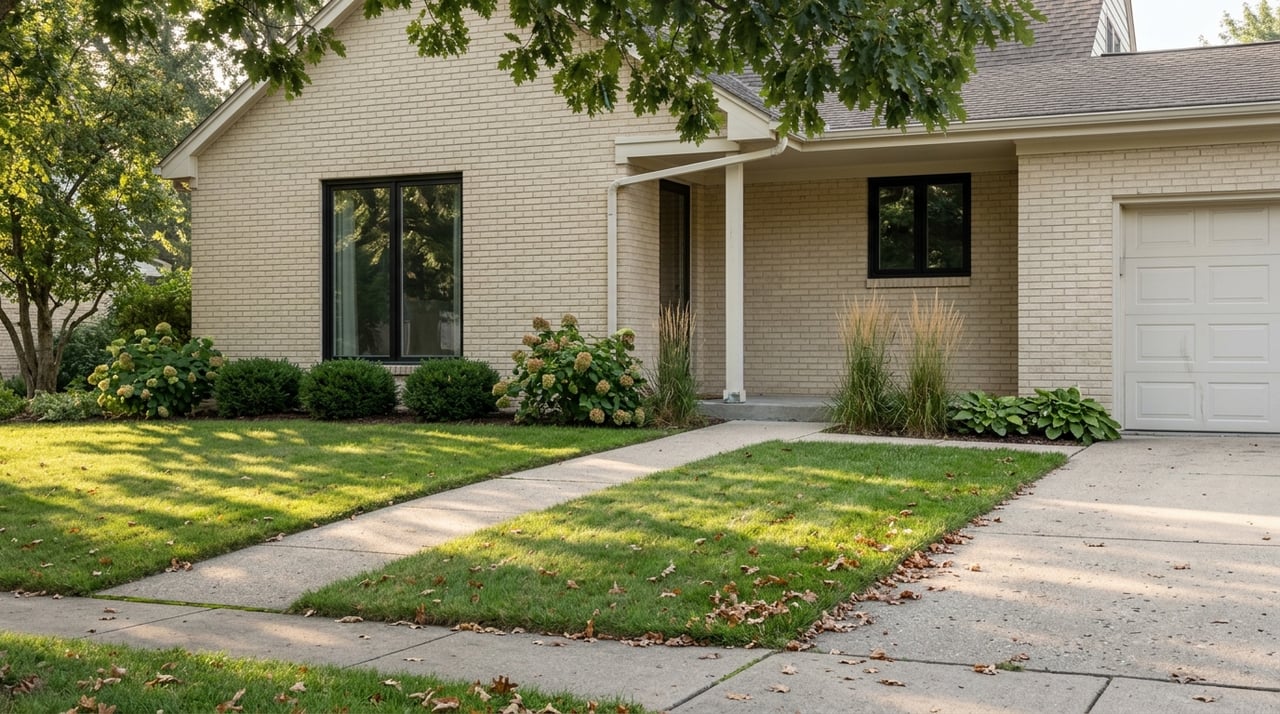
Walk any listing on the older streets around Dulaney, Hampton, or the Padonia corridor and the first thing an agent points out is the canopy. Sixty-year-old oaks arching over the driveway. A silver maple that shades the whole back yard by July. It is the exact feature that makes these blocks feel established rather than built yesterday, and it is the reason so many buyers fall for a house before they have seen the kitchen.
It is also, underground, a problem.
Those same mature root systems sit directly above sewer laterals that were installed when the houses went up, decades before PVC became standard. In much of Timonium's older housing stock, that means clay or cast iron pipe, three to four inches wide, running roughly 40 feet from the foundation to the county main under the street. Clay cracks at its joints over time. Cast iron corrodes. Roots find both, and once they get inside a pipe they do not stop growing.
The Beauty and the Liability Share the Same Root System
This is not a generic Baltimore County caution. It is a specific one for a specific kind of block. A local restoration company that responds to water and sewage emergencies across the area has mapped exactly where these failures cluster: the older estate neighborhoods near Hampton, the established streets of Dulaney and Padonia, and the finished-basement townhome and condo clusters in Mays Chapel and Pot Spring, where aging clay and cast-iron laterals under mature tree canopy are named as a recurring driver of root intrusion and main-line backups.
That detail matters for sellers because it flips the usual assumption. A newer subdivision with young street trees and PVC plumbing does not carry this risk in the same way. A 1960s or 1970s home under a fifty-year-old oak canopy does, precisely because the tree that adds curb appeal has had five decades to send roots toward the one thing underground that offers water and warmth: a sewer pipe.
What the County Owns, and What You Own
Baltimore County's Bureau of Utilities inspects sewer mains, cleans mainline stoppages, and maintains the public portion of the system. The county's own description of the work states plainly that its crews relieve sewer house connection stoppages only in the public portion of the lateral pipe, reachable through a visible clean-out on the property. Everything from that clean-out back to your house is not the county's job. It is yours.
That split matters more once you know the age of what you are dealing with. Baltimore County's sewage collection system runs through roughly 3,000 miles of pipeline, and the average age of that system is about 45 years. Private laterals installed alongside homes built in the same era are, in most cases, aging right along with it. A pipe that has been underground for four or five decades, sharing soil with a mature tree, is not a hypothetical risk. It is closer to a maintenance item whose bill has not come due yet.
The county keeps the main flowing. Everything from your basement floor to the property line is yours, roots and all.
What Failure Actually Costs
Not every root intrusion means a full dig-up. The fix depends on how far the damage has progressed by the time someone puts a camera down the line, and the published ranges vary depending on who is doing the estimating.
| Situation | Typical Fix | Cost Range | Time to Complete |
|---|---|---|---|
| Roots present, joints intact | Spot repair or trenchless lining | $3,000 to $10,000, depending on soil and depth | A few days to two weeks |
| Full structural failure | Complete lateral replacement | $10,000 to $20,000 or more | Two to several weeks with permitting |
The spread is wide because the variables are local: soil type, depth of the line, whether the repair requires cutting into a driveway or a finished basement floor, and how quickly the county can inspect and sign off on the work. None of those variables move faster because you have a settlement date on the calendar.
The Signs That Show Up Before the Backup
Root intrusion rarely announces itself with a flood. It shows up first as a pattern, and the pattern is usually ignored until it repeats:
- A single slow drain that clears with a plunger, then slows again within a few weeks
- Gurgling sounds from a toilet when the washing machine drains
- Multiple fixtures backing up at once, rather than just one
- A damp patch in the yard that tracks the path of the lateral, even without recent rain
- Sewer odor near a basement floor drain that comes and goes
Any one of these on its own might be nothing. Two or three together, in a home built before the 1980s with mature trees near the foundation, is worth a camera inspection before a buyer's inspector finds it for you.
Why the 30-Day Clock Is the Real Risk
The technical fix is rarely what derails a sale. The timeline is.
A standard Maryland residential contract runs on inspection contingencies measured in days, and most settlements close within thirty to forty-five days of ratification. Root intrusion discovered during a buyer's home inspection sets off a sequence that does not respect that window:
- The inspector recommends a sewer scope, which most general home inspections do not include by default
- A licensed plumber runs the camera and confirms root intrusion or a structural break
- The seller and buyer negotiate who pays and what gets fixed before closing versus credited at settlement
- If repair is required, Baltimore County permitting and the actual excavation or trenchless work begin
- Final inspection and sign-off happen before the work counts as complete
Steps two through five alone can eat two to three weeks. If that starts after a home inspection that lands two weeks into a thirty-day contract, the math no longer works without either a rush job, a price credit in lieu of repair, or a settlement extension that neither side wants to be the one asking for.
A Pre-Listing Sequence Worth Running
For sellers in the older sections of Dulaney, Hampton, Mays Chapel, Pot Spring, Greenspring, and the Padonia corridor, the fix is not complicated. It is just something almost nobody does before they have to.
- Order a sewer scope inspection before listing, not after an offer arrives. Most run a few hundred dollars and take under an hour.
- Locate your clean-out now. If you cannot find it, a plumber can, and you will need to point a buyer's inspector to it anyway.
- If the scope shows early-stage root intrusion, get a root cutting and jetting done and keep the invoice. It is cheap insurance against a much larger negotiation later.
- If the scope shows a structural issue, get two repair quotes before you list, so you are pricing the home with real numbers instead of guessing what a buyer's inspector will find.
- Keep the video and the invoice in your disclosure file. A documented, already-addressed lateral is a selling point. An undocumented one is a question mark a buyer's agent will use against your price.
Frequently Asked Questions
Does Baltimore County require a sewer lateral inspection before I sell my home? No. Unlike some jurisdictions that tie lateral inspections to a home sale, Baltimore County does not mandate one. That absence of a requirement is exactly why so many sellers skip it and find out about a problem only when a buyer's inspector does.
How do I know if my lateral is clay, cast iron, or PVC? Age and permit history are the best clues. Homes built before the 1980s in this part of Baltimore County are more likely to have clay or cast iron. A camera inspection will confirm it in minutes.
Who typically pays if a buyer's inspection finds a damaged lateral? This gets negotiated like any other inspection item, through repair, price credit, or a contract addendum. Sellers who already have a scope and a repair quote in hand tend to keep more control over that conversation than sellers hearing about the problem for the first time from a buyer's report.
Does homeowner's insurance cover a collapsed sewer lateral? Standard policies generally treat this as a maintenance issue rather than a covered loss, though some carriers offer optional service line endorsements. Check your specific policy rather than assuming coverage either way.
Is this only a concern for very old homes? The clearest risk is homes from the 1950s through the 1970s with mature trees near the foundation, but any home with clay or cast iron piping and established trees or shrubs nearby is worth a look regardless of exact age.
If you are getting ready to list in one of Timonium's older, tree-lined neighborhoods, this is exactly the kind of thing worth sorting out before a buyer's inspector finds it for you. Dan Cohen Homes works these streets regularly and can walk you through what a pre-listing inspection should cover, what a fair repair credit looks like if something turns up, and how to keep a thirty-day clock from becoming a thirty-day problem.
